



Choosing the Height and Size of an Artificial Plant | A Practical Guide
|
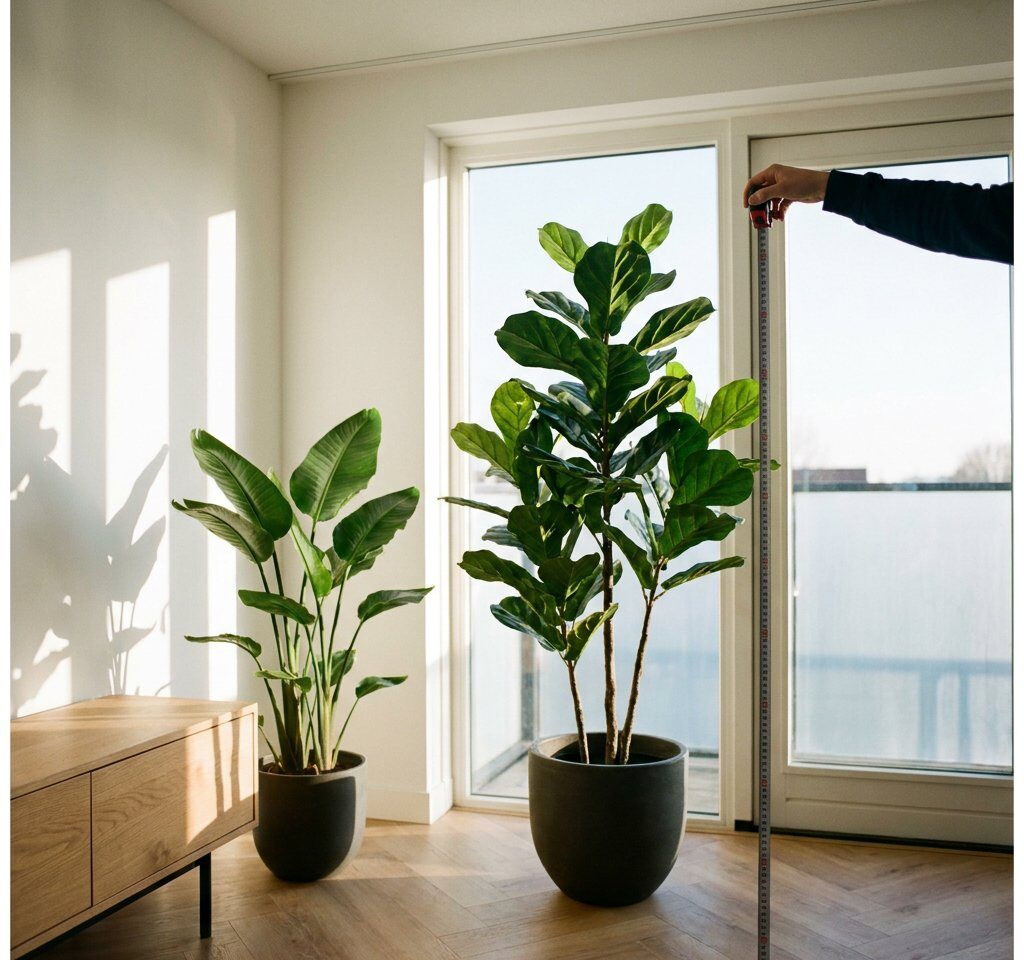
An artificial plant really comes into its own when its height, width, and pot are well-suited to the space. A plant that’s too small gets lost in a tall room, while an XL artificial plant can quickly make a compact living room feel too crowded. Therefore, don’t just measure the available height; also consider the clear floor space, walking space, and the extra centimeters required for the decorative pot.
First, measure the spot where you’ll place your artificial plant
Start by measuring the height from the floor to the ceiling, a light fixture, a beam, or a windowsill. Next, measure how much space is available around the plant. Especially for bushy plants, such as a Strelitzia, palm, or ficus, the crown width is just as important as the plant’s height.
It is best to leave 30 to 40 cm of clear space around a standing artificial plant. This keeps the space practical and makes the plant look deliberately placed rather than crammed in. In a narrow hallway, next to a sofa, or by a doorway, a slimmer model is often a better choice than a wide, flared artificial tree. For a shelf or desk, a compact tabletop plant is a practical choice that takes up very little space; check out, for example, the 24-cm artificial plants in decorative pots.
What height of artificial plant is right for your space?
| Field or application | Appropriate height | Examples |
|---|---|---|
| Table, shelf, or windowsill | 15 to 60 cm | Succulent, mini anthurium, or hanging plant |
| Living area or bedroom | 100 to 150 cm | Monstera, olive tree, or yucca |
| Lobby, office, or meeting room | 150 to 200 cm | Ficus, bamboo, Areca palm, or ornamental grass |
| Entrance, atrium, lobby, or storefront | 200 cm and taller | Large Strelitzia, Kentia Palm, or Coconut Tree |
A 120-cm artificial plant is a nice medium size to place next to an armchair, sideboard, or low cabinet. Would you like to get a sense of the scale in your living room using a compact, realistic model first? Then take a look at the 90-cm potted Ficus lyrata. As an intermediate size on the larger end, the 125-cm Philodendron helps illustrate differences in height and volume. Do you have high ceilings or an open entryway? In that case, choose a plant that is 180 to 235 cm tall, such as the 180-cm potted Kentia palm. Large spaces can even accommodate an artificial plant measuring 260 to 310 cm, provided there is sufficient width and headroom.
Pay attention to the width and shape of the artificial plant
Not every artificial plant grows straight up. For example, because of its flexible leaves, a Strelitzia can grow much wider than its pot would suggest. Therefore, do not place wide plants right next to a walkway. For a narrow corner, a yucca, bamboo, standard olive tree, or ornamental grass are often more suitable. Do you want the plant to fit better in the available space? Then read our guide on shaping artificial plants to achieve the right shape and drape.
Do you want more greenery without taking up a large floor space? In that case, combine different heights. For example, place a 120-cm-tall plant next to a short potted plant, or hang a plant from a cabinet. That adds depth without making the space look cluttered. In our blog, you’ll also find a guide to choosing artificial hanging plants, complete with suitable options.
Choose a decorative pot that is proportionate
The pot of an artificial plant is usually smaller than the plant itself and is often weighted down for added stability. Choose a decorative pot whose inner diameter is about one-third to one-half the width of the plant’s crown. A broad, full plant therefore also needs a pot with sufficient visual presence.
Keep the pot height in mind: a 150-cm artificial plant in a 30-cm decorative pot will appear taller overall. Is the plant just a little too short for that spot? Follow the tips from ” Planting an Artificial Plant in a Pot” (choosing the right pot size) and fill the decorative pot with clay pellets, sand, gravel, or a sturdy filler material. Finish the top with moss, gravel, or wood chips for a neat appearance.
Frequently Asked Questions About Choosing the Right Size for Artificial Plants
What pot size do I need for an artificial plant?
Measure the diameter and height of the existing inner pot. The decorative pot must be spacious enough on the inside to accommodate this pot and fill it. To ensure stability, it is not recommended to use a decorative pot that is too narrow, especially with tall artificial plants.
How can I raise an artificial plant?
Place a sturdy base material, such as clay pellets, sand, or gravel, at the bottom of the decorative pot. Place the inner pot on top and check from a distance to make sure it’s at the desired height. Fill in the sides and finish the top with decorative material.
Can a large artificial plant fit in a small space?
That’s fine, as long as the plant doesn’t block the walkway and the canopy width is appropriate. In a compact space, it’s better to choose a tall, slender artificial plant rather than a wide one with lots of leaves.
Where can I view artificial plants and pots side by side?
At Eliassen, you’ll find artificial plants ranging from 15 to 310 cm, decorative pots, and decorations for both small and large spaces. Browse our selection of artificial plants and compare sizes and combinations online, or visit our large showroom in Ammerzoden for personalized advice. As a family-owned business, Eliassen is committed to service, quality, and competitive prices thanks to its own brand and direct imports.
Share on:
Share Tweet Share Share Pin it