



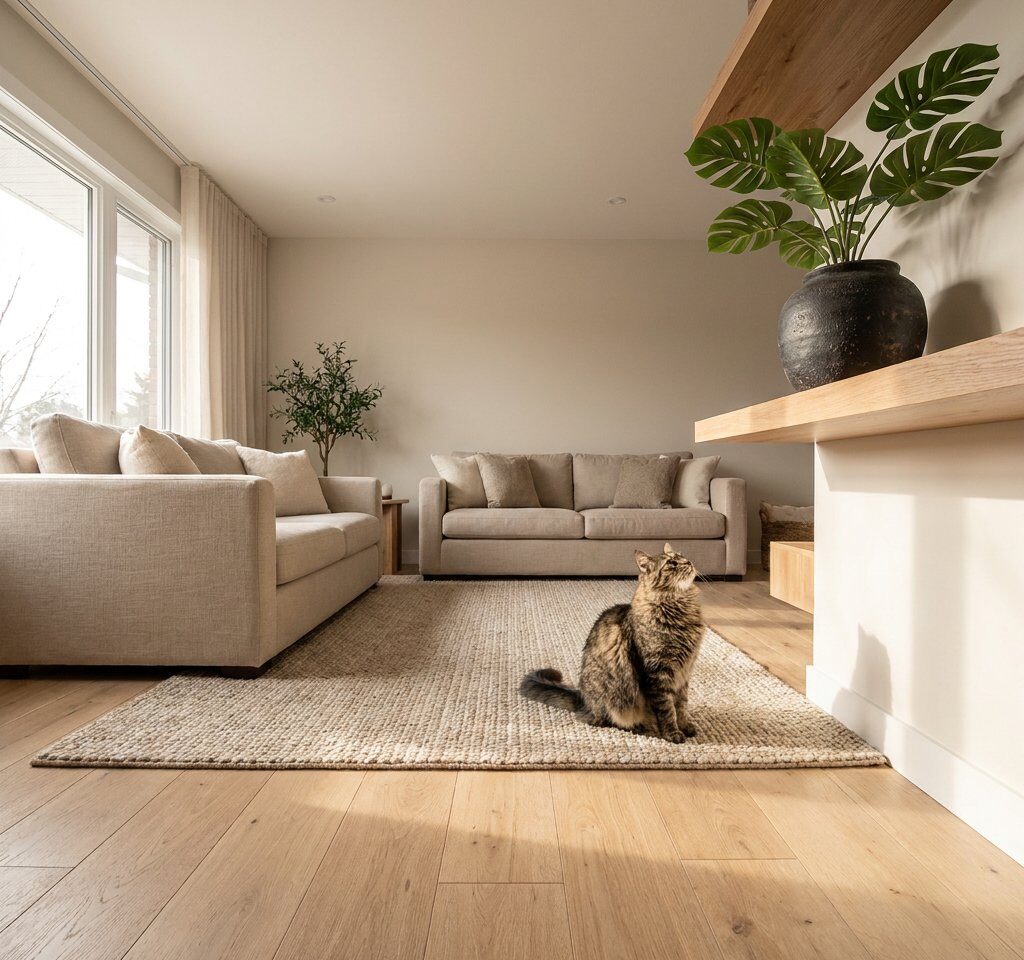
Artificial plants and pets: what to watch out for | Eliassen
|
A green interior and pets can go very well together, but artificial plants are not automatically safe for cats, dogs, birds or small mammals. They contain no natural plant toxins, yet a curious animal may bite off and swallow leaves, twigs, decorative materials or parts of the pot. So use artificial plants primarily as low-maintenance decor and always place them out of reach of animals that like to chew, dig or play.
At Eliassen you’ll find lifelike artificial plants in a wide range of sizes, from small potted plants to large artificial palms, bamboos and trees. Browse our artificial plants online to see what suits your interior, or visit the large showroom in Ammerzoden for personal advice on size, pot and placement.
Are artificial plants safe for cats and dogs?
Artificial plants aren’t living and therefore don’t contain natural substances such as calcium oxalate, saponins or pollen. That does not mean an artificial plant is safe to chew on. Plastic leaves, metal reinforcements, glue, paint, pebbles and filler are not meant to be mouthed or swallowed.
Young cats, dogs and small mammals in particular explore objects with their mouths. A bitten-off leaf or loose decorative pebble can cause choking, irritation or a blockage. With birds, the material deserves extra attention too: they may peck at thin fibres, leaves and twigs.
Use artificial plants as decoration, not as toys or safe chew items. Does your pet show a lot of interest in plants? Choose a place the animal cannot reach and offer an appropriate alternative, such as cat grass for cats or safe toys for dogs.
Why real houseplants can be risky
Many popular houseplants are unsuitable for pets that nibble on them. Examples include Monstera, Philodendron, Dieffenbachia, peace lily, Sansevieria, Aloe vera and various types of lilies. Symptoms vary by plant and species, and may include drooling, irritation of the mouth and throat, vomiting, diarrhoea, lethargy or swelling.
Lilies can be particularly dangerous for cats. Flowers, leaves, pollen and even water from a vase can pose a risk. If you don’t want to keep checking which live plants are safe, an artificial plant can be a practical alternative—provided you also consider the physical safety of the plant itself.
How to place artificial plants wisely in a home with pets
The safest choice depends on your pet’s behaviour, size and ability to jump or climb. A plant on the floor can be fine for an animal that ignores it, but is less suitable for a playful cat or a dog that likes to drag things around.
Choose a spot out of reach
- Place small artificial plants on a tall cabinet or wall shelf.
- Use a sturdy plant stand that won’t tip over easily.
- Choose a hanging plant in a place your pet can’t reach; see our guide to artificial hanging plants.
- Put large artificial plants in a quiet corner, away from walkways and play areas.
- Close off a room with decor if your bird, rabbit or cat enters there unsupervised.
Mind the stability of pot and plant
A large artificial plant can be top-heavy, especially when a cat jumps at it or a dog runs past it. Use a wide, stable pot and make sure the plant is firmly secured. Read how to secure and safely pot an artificial plant in our article on potting an artificial plant. Place a tall artificial palm or tree preferably not next to a sofa, cabinet or scratching post that can serve as a step.
Also check the finish of the pot. Loose decorative pebbles, moss, bark or polystyrene foam can be attractive to some animals and may be eaten. Finish a pot only with materials your pet cannot reach, or opt for a closed finish.
Check the artificial plant regularly
Occasionally check whether leaves, branches, stems or decorative parts are coming loose. Remove damaged parts immediately and put an artificial plant away if you notice your pet is chewing on it. Dust the leaves monthly with a dry cloth. For stubborn dirt, you can gently use a slightly damp cloth with mild soap. Let the plant dry thoroughly before putting it back. Also see our tips for cleaning artificial plants.
Which artificial plants suit a home with pets?
The best artificial plant isn’t necessarily a specific species, but a model that fits the spot where you want to place it. For a high shelf or cabinet, small potted artificial plants are convenient. For an empty corner, consider a larger artificial bamboo, ficus, Strelitzia or palm, provided the pot is stable. Hanging plants are a great solution for spaces where you want to add greenery without using floor space. A plant wall or artificial hedge is also a vertical green solution that stays out of pets’ reach.
At Eliassen you’ll find artificial plants of about 15 to 310 cm for the living room, hall, bathroom, veranda and office. Many models come in a basic pot and can be combined with a decorative pot or plant stand. Not sure about the right size or a stable setup? In the showroom in Ammerzoden you can view many artificial plants in real life.
What to do if your pet has eaten part of an artificial plant?
Has your cat, dog, bird or other pet chewed on an artificial plant or swallowed parts? Carefully remove loose remains from the mouth if it’s safe to do so and, if possible, keep a piece of the material or take a photo of the plant. Do not give an emetic and don’t try to induce vomiting yourself.
Contact a vet immediately if you suspect material has been swallowed, if a metal part or a large amount is missing, or if your pet develops symptoms. Watch for coughing, gagging, vomiting, lethargy, abdominal pain, not wanting to eat or difficulty breathing. In case of acute breathing problems or possible choking, emergency care is needed.
Frequently asked questions about artificial plants and pets
Are artificial plants non-toxic for cats?
You can’t simply call artificial plants non-toxic or safe for cats. They contain no natural plant toxins, but materials and loose parts are not meant to be eaten. Place artificial plants out of reach of cats that chew on them or pull off leaves.
Can dogs get sick from artificial plants?
Yes, especially when a dog swallows pieces of plastic, wire, glue residue, moss or pebbles. The reaction depends on the material and the amount. When in doubt, always contact your vet.
Which houseplants are non-toxic for cats?
Some often-cited cat-friendly houseplants are spider plant, Calathea, Areca palm, bromeliads and certain ferns. Always check safety for the exact plant species, as names and varieties can look alike. Even a non-toxic plant can cause stomach upset if a cat eats a lot of it.
Are artificial flowers a good alternative to fresh flowers?
Artificial flowers can be a low-maintenance alternative when you don’t want fresh flowers at home due to pollen, wilting leaves or potential risks of certain flower species. The same applies here: place them out of reach if your pet likes to nibble on decor.
Where can I view artificial plants?
You can easily order artificial plants online from Eliassen or visit the large showroom in Ammerzoden. As a family business, Eliassen stands for personal service, quality and competitive prices thanks to direct import and an in-house brand. This way you can choose an artificial plant that suits your interior and a practical spot at home.

Share on:
Share Tweet Share Share Pin it