



Winterizing a water feature: step-by-step plan | Eliassen
|
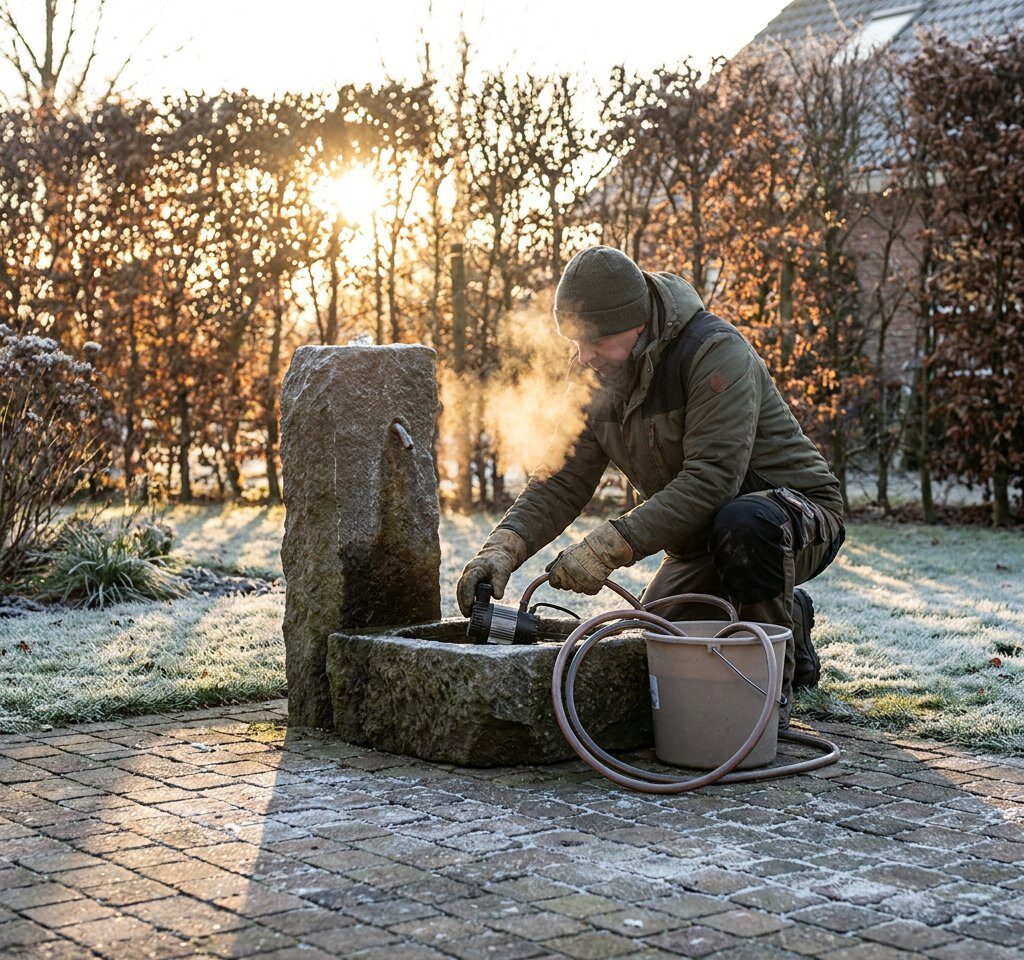
Winterizing a water feature
Winterizing a water feature prevents damage from freezing water, a broken pump and cracks in the reservoir. As soon as the first night frost is forecast, it’s wise to switch off your fountain, bronze spray figure or other water feature, empty it completely and protect it well. With the steps below, you can safely prepare your water feature in the garden, on the patio or on the balcony for winter.
Why should you winterize a water feature?
Water expands when it freezes. As a result, even a small layer of leftover water can damage a basin, pipe, hose or pump. Reservoirs made of plastic, polystone, ceramic and natural stone can crack when water freezes in seams, openings or porous areas.
The pump also needs attention. If water remains in the pump or impeller, frost can damage parts or prevent the pump from starting properly in spring. Want to better understand the setup of pump, pipes and reservoir? Read: how a water feature works. By cleaning your water feature in time and storing it dry or frost-free, you extend the service life of the components and make the spring start-up much easier.
When should you winterize a water feature?
Winterize your water feature before the first night frost. In the Netherlands this is usually somewhere between mid-October and early November, but the weather remains leading. Therefore, check the forecast regularly, especially when cold nights are expected.
Do not wait until the water has already frozen. Even during a mild winter, sudden frost periods can occur. In doubt? It’s safer to switch the feature off a little earlier. A water feature that isn’t in use doesn’t need a full basin or a running pump in winter.
Winterizing a water feature in 6 steps
With this practical step-by-step plan you protect the most important components against cold, moisture and dirt. Take the time to empty and clean everything completely, because leftover water is a common cause of frost damage.
1. Switch off the pump and power
First unplug the pump from the socket. If you have a solar pump, switch it off according to the model’s instructions. Also disconnect any LED lighting, extension cables and other electrical accessories.
Immediately check the cables for damage, wear or kinks. Store loose plugs, transformers and extension leads dry. This reduces the chance of moisture problems and lets you reconnect safely in spring.
2. Empty the reservoir and basin completely
Let all the water drain from the water feature. Use a drain tap if present, scoop the water out or use a small submersible pump. Pay extra attention to low points, hoses, bends and recesses where water can remain. Optionally fit a check valve to prevent backflow during disconnection and in frost.
Then dry the basin, bowl or reservoir with a cloth. Preferably let the feature air for a while before covering it. Emptying a water feature is more important than just lowering the water level: even a residual layer of water can cause problems in severe frost. Working with a built-in reservoir? A substructure for water features with a lid makes draining and cleaning easier and helps keep parts frost-free.
3. Remove, clean and store the pump frost-free
Take the pump out of the reservoir and remove leaves, algae, sand and other dirt. Clean the strainer and check that the impeller can move freely. Dirt in the pump can settle during winter, reducing performance in spring or causing a humming noise.
Store the pump in a frost-free place, such as a shed, garage or storage room. Always consult the manufacturer’s instructions. For many pumps it’s advisable to clean the pump and keep it in a bucket of water so seals don’t dry out. Make sure the cable lies loose without sharp kinks.
4. Clean the feature, hoses and accessories
Remove leaves, silt, limescale and algae from the feature. Use lukewarm water and a soft sponge or cloth, and avoid aggressive cleaning agents. These can damage the finish of natural stone, bronze, metal or polystone.
Also empty hoses and connections. If needed, gently blow through a hose to remove residual water. Check fittings, strainers and hose clamps for damage. Are parts for water features worn? Replace them preferably before the spring start-up.
5. Protect the water feature according to the material
Not every material needs the same protection. A well-covered feature stays cleaner in winter, but the cover must allow ventilation. Moisture that remains trapped can cause staining, mould growth or frost damage.
- Natural stone: protect with a waterproof, breathable cover. Do not place plastic directly on the stone, as moisture cannot evaporate properly.
- Polystone and plastics: always empty the system. Even frost-resistant models can become more brittle during prolonged or severe frost.
- Bronze water features: bronze can remain outside, provided the water is drained and pump and hoses are empty. Clean the surface gently and, if desired, treat it with a suitable wax to maintain the appearance.
- Corten steel and other metals: do not leave water in the reservoir and prevent dirt from accumulating around the base or drain.
6. Check the location and drainage
Remove leaves and twigs around the water feature. This prevents drains from silting up and water from collecting around the plinth or basin. If the feature is in a very open spot, check that a cover is secured well without sealing the surface airtight.
Do you have ceramic pots or terracotta décor around your fountain? Ideally place them on pot feet and make sure excess water can drain away. Ceramics can also crack due to freezing water.
Can a water feature stay outside in winter?
In many cases a water feature can simply remain outside. That applies, for example, to many bronze statues, natural stone ornaments and metal water objects. The condition is that the water system is completely switched off, emptied and protected.
Prefer not to run a water feature in winter when frost is expected. Flowing water does not always freeze immediately, but water in hoses, narrow jets, pump chambers and reservoirs remains vulnerable. Simply switching off is not enough: remove the pump and let all parts drain well.
Restarting the water feature in spring
Only restart your water feature when the risk of night frost has passed. This is often from March or April, depending on the weather. Remove the cover, check the feature for cracks, leaks and loose connections and clean the reservoir again.
Then refit the pump, connect hoses and any lighting, and fill the reservoir with clean water. Check that the water flow runs properly and that the pump does not make an unusual noise. If the flow is too strong or too weak, adjust it with a control valve for water features or fountains. If desired, add a suitable maintenance product such as Fountain Clear to keep the water clear for longer.
Frequently asked questions about winterizing a water feature
How do I winterize my water feature?
Switch off the pump, unplug it and empty the reservoir completely. Clean the pump, filters and hoses, remove residual water and store the pump frost-free. Clean the feature and cover vulnerable materials with a breathable protection.
In which month should you winterize the garden and the water feature?
Usually between mid-October and early November. Focus on the weather forecast and act before the first night frost. If an early cold spell is coming, don’t wait. Also see our garden ideas for autumn and winter.
Do I have to remove the pump from my water feature?
Yes, it’s wise to remove the pump. Water in the pump can freeze and damage the impeller, housing and seals. Clean the pump and store it frost-free according to the manufacturer’s instructions.
How do I maintain my water feature in winter?
Once the feature has been winterized, you need to do very little maintenance. Occasionally check that the cover is secure, remove accumulated leaves and make sure no water remains in the reservoir. After heavy wind or rain, also check the drainage around the feature.
Can a bronze fountain remain outside in winter?
A bronze fountain can usually remain outside. Do drain all the water, empty the hoses and store the pump in a frost-free place. Clean the bronze with lukewarm water and a soft cloth. To retain the shine, you can treat the bronze with a suitable wax.
Do you have questions about winterizing your water feature or are you looking for a replacement pump, hose, basin or other part? Eliassen will be happy to help with personal advice. You are welcome in the large store and showroom in Ammerzoden. As a family business, service comes first, with quality products at sharp prices for garden lovers throughout the Netherlands and Belgium. Also view our range of water features.

Share on:
Share Tweet Share Share Pin it