



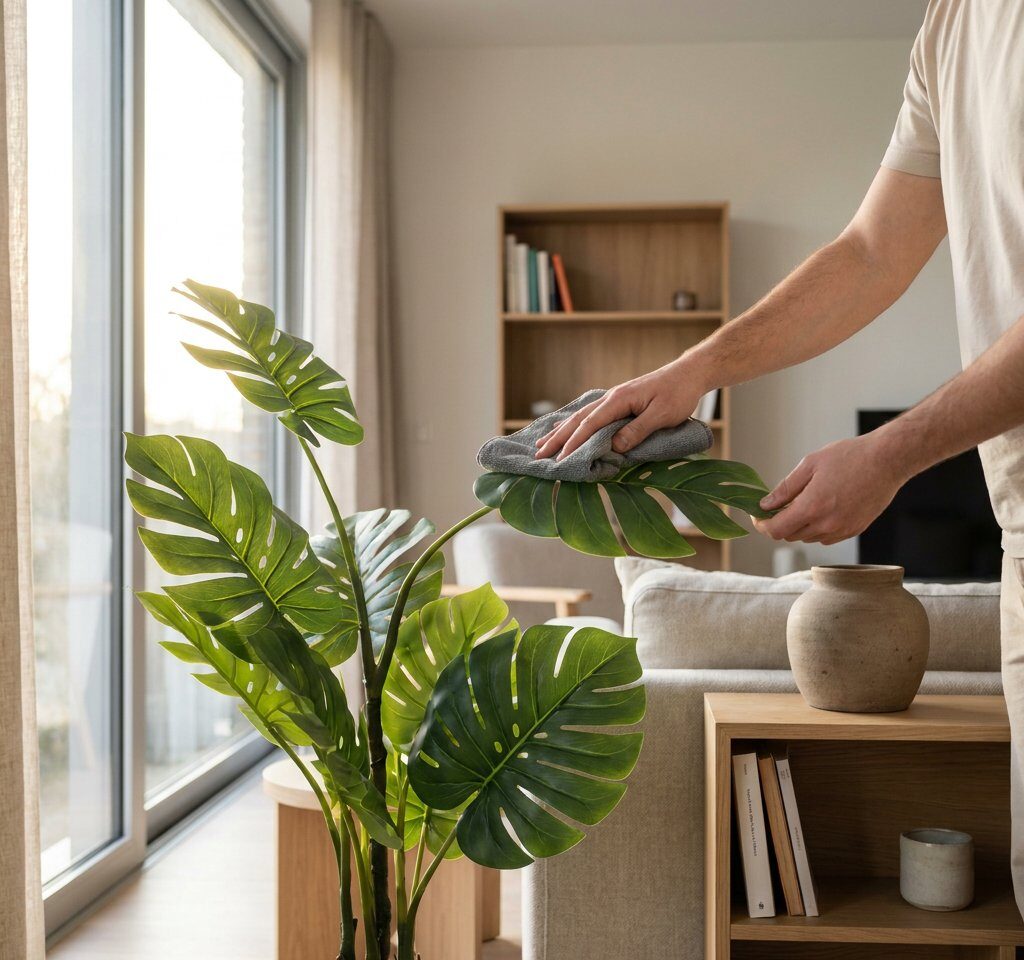
Artificial plant care: tips for clean, fresh-looking greenery
|
Artificial plants don’t need much, but they aren’t completely maintenance-free. With a few simple actions they stay beautiful, fresh and true to nature for longer. Think of regular dusting, gentle cleaning and being mindful of bright sunlight. This prevents leaves from turning dull, dust from building up, or colors fading faster.
Want to know the best way to care for artificial plants? Below you’ll read exactly how often to clean, which products are safe, and how to easily include the care of artificial flowers in your routine.
Why artificial plant care matters
An artificial plant doesn’t need water, nutrients or pruning, but it does collect dust and dirt. Especially in living rooms, offices, bathrooms, shops and hospitality venues, leaves become dull over time. With proper care, artificial plants look fresher and the leaf shape stands out much better.
Good maintenance also extends lifespan. Dirt that stays too long can settle in veins, on stems and along the edges of leaves. In addition, direct sunlight can cause discoloration over time. With basic care your artificial greenery stays neater—and beautiful for longer.
How often should you maintain artificial plants?
For most artificial plants, dusting once a month is a solid baseline. If a plant sits in a calm spot at home, that’s often enough. In spaces with more dust, open windows, cooking fumes or heavy foot traffic, clean more often.
- Living room or bedroom – usually dust once a month
- Office, shop or hospitality – check and clean every 2 to 4 weeks
- Bathroom – regularly check for residue or moisture deposits
- Sheltered outdoors, such as a veranda – clean more often due to pollen and outdoor dust
If you see a dull haze on the leaves, it’s time for maintenance. Don’t wait until the entire plant looks visibly dusty.
For humid rooms, read extra points to consider in Artificial plants in the bathroom: tips.
Dusting artificial plants – how to do it safely
Dusting is the most important step in artificial plant care. It removes most dirt without getting the plant wet. Always work gently and support branches or stems if the plant has a more delicate build.
Which tools work best?
- Microfiber cloth for smooth leaves and stems
- Duster for larger plants and airy branches
- Soft brush for small leaves, veins and hard-to-reach spots
- Vacuum cleaner with a soft brush attachment on low setting for sturdy, large artificial plants
Practical tips for dusting
- Work from top to bottom
- Support leaves with your hand while wiping
- Don’t use hard brushes or abrasive cloths
- Never set the vacuum cleaner to its highest setting
Just unboxed a new plant? First, gently shape the branches and leaves. After that, ongoing care is easier to keep up.
Cleaning artificial plants with water and mild soap
Sometimes dusting isn’t enough—for example, with stains, greasy residue or dirt that has settled. In that case, gently clean with lukewarm water and a little mild soap. See the step-by-step guide in Cleaning artificial plants.
Always use a soft cloth that’s slightly damp, not soaked. Wipe each leaf individually and, if needed, finish with a clean cloth. Then let the plant dry thoroughly in a ventilated place.
Step-by-step cleaning guide
- First remove loose dust with a duster or microfiber cloth.
- Moisten a cloth lightly with lukewarm water and a small amount of mild soap.
- Gently wipe leaves, stems and visible parts of the plant.
- Go over the plant again with a clean, damp cloth to remove any soap residue.
- Let everything dry well before putting the plant back.
What to avoid using
- Harsh cleaners
- Abrasives or scouring pads
- Hot water
- All-purpose cleaners with strong chemicals
These can damage the finish, affect the color, or make the material age faster.
Caring for large and small artificial plants differently
Not every artificial plant needs exactly the same approach. Larger specimens often have more surface area where dust settles, while smaller artificial plants usually have more detail and therefore need more precise cleaning.
Large artificial plants and trees
With larger models, it’s easiest to work in sections. Start at the top and go branch by branch. A duster or a vacuum with a soft brush on low is useful here. If there’s more dirt, wipe leaves with a slightly damp cloth. Pay extra attention to the joints between leaf and stem, as dust often lingers there.
Small artificial plants and artificial flowers
Clean smaller decorative plants and artificial flowers with a soft cloth or fine brush. This helps prevent petals from creasing or coming loose. Caring for artificial flowers usually requires a bit more precision, since flower shapes are often more delicate than broad leaves.
Preventing discoloration from sunlight
Artificial plants don’t need sunlight to stay beautiful. In fact, prolonged direct sunlight can cause discoloration. You’ll notice this especially on leaves that lose their fresh green or on parts facing a window.
So avoid placing artificial plants in constant, direct sunlight. Diffused light is usually a better choice. If you still want a plant near a window or in a sunny spot, rotate it a quarter turn now and then so any discoloration is more even. For sheltered outdoor use, it’s extra important to keep in mind Artificial plants and sunlight. If you want extra protection against fading, also consider UV‑resistant artificial plants.
Caring for artificial plants outdoors or on a veranda
If your artificial plants are outside or on a covered veranda, they’ll encounter more dust, pollen and moisture. That usually means cleaning them a bit more often than plants that stay indoors. Sheltered outdoor placement is fine, but heavy rain and prolonged intense sunlight are less favorable.
- Remove dirt regularly with a dry cloth or duster
- Wipe residue gently with lukewarm water and mild soap
- Always let the plant dry thoroughly
- Avoid spots where rainwater lingers on the material
Also check outdoor plants a little more often for color changes, since UV and weather have a bigger impact there. For the right choices and tips, see Best artificial plants for outdoors.
How to keep artificial flowers looking good
Caring for artificial flowers is much like caring for artificial plants, but flowers often need a gentler touch. Petals, stamens and fine details can deform more quickly if you scrub too hard or use too much water.
Use a soft duster, makeup brush or dry microfiber cloth to remove dust. For stains, you can use a slightly damp cloth—as long as you work gently and don’t soak the material. Always let artificial flowers dry completely before putting them back in a vase or arrangement.
Common mistakes in artificial plant care
- Rubbing too hard, causing leaves to crease or come loose
- Using hot water
- Reaching for harsh cleaners for a small spot
- Leaving the plant in direct sunlight for long periods
- Letting dust build up, making cleaning harder
By avoiding these mistakes, care stays simple and you prevent unnecessary wear.
Handy checklist for quick care
- Check the plant for dust and dull spots
- Dust with a duster, cloth or soft brush
- Clean stains with lukewarm water and mild soap
- Let everything dry well
- Don’t leave the plant in direct sunlight for long periods
- Repeat monthly—or more often in high-use spaces
Frequently asked questions about artificial plant care
What’s the best way to care for artificial plants?
The best foundation is regular dusting and occasional cleaning with lukewarm water and mild soap. That keeps leaves clean and prevents dirt from building up.
How should I dust my artificial plant?
Use a microfiber cloth, duster or soft brush. For larger, sturdy plants, a vacuum with a soft attachment on low can also work. Always work gently from top to bottom.
How often should I clean artificial plants?
On average, dusting once a month is enough. In dusty rooms or with sheltered outdoor use, you may need to clean more often.
Can you clean artificial plants with water?
Yes—use lukewarm water and preferably a little mild soap. Don’t use hot water or aggressive cleaners.
What are the downsides of artificial plants?
The main downside is that they attract dust and can discolor with prolonged direct sunlight. With proper care, these downsides are usually easy to limit.
How do I care for artificial flowers?
Care for artificial flowers by gently dusting with a soft cloth, duster or fine brush. For stains, clean very lightly with a damp cloth and let them dry well afterward.
Personal advice on artificial plants
Want tips not only on caring for artificial plants, but also on which plant best suits your interior, office or veranda? Eliassen is happy to help with practical advice. As a family business, service and quality come first, with sharp prices thanks to our own brand and direct import. Also check the Artificial plants assortment to compare right away.
You can find inspiration online throughout the Netherlands and Belgium, and you’re also welcome in the large store and showroom in Ammerzoden. There you can view and compare artificial plants from small to large in real life.

Share on:
Share Tweet Share Share Pin it