



Glass art styles: types, key features and tips
|
Glass art is surprisingly versatile. While one person falls for sleek abstract forms and clear color bands, another prefers figurative glass flowers, animals, or elegant vases with a classic look. That’s why it helps to know the most important art styles in glass art. When you know what to look for, it becomes much easier to choose a piece that matches your taste, interior, and the atmosphere you want to create at home or at the office.
In glass art, style, technique, and appearance often overlap. Types of glass art and techniques such as mouth-blown glass, glass fusing, crystal glass, multilayer decorations, and influences from Murano or Bohemia each give a work its own character. If you love layered, engraved decorations, you’ll find plenty of inspiration in the Cameo glass collection. Below you’ll discover which kinds of glass art there are, how styles differ, and how to recognize a style that truly suits you.
Which art styles appear in glass art?
Glass art doesn’t have a rigid classification with just a few boxes. Still, there are several clear style directions you often see in decorative and artistic glass objects. Think of abstract glass art, figurative glass art, modern design, classic glassware, and work with clear influences from well-known glass regions such as Murano and Bohemia. These styles differ in form, use of color, detail, and the way light plays through the glass.
An abstract glass sculpture usually focuses on line, movement, contrast, and color experience. With figurative glass art you instantly recognize a subject, such as an animal, flower, human figure, or couple. Classic glasswork tends to favor refinement, symmetry, and transparency, while more modern styles like to work with expressive forms, color gradients, and striking combinations. As a result, within glass art you can find both understated and bold pieces.
Abstract glass art
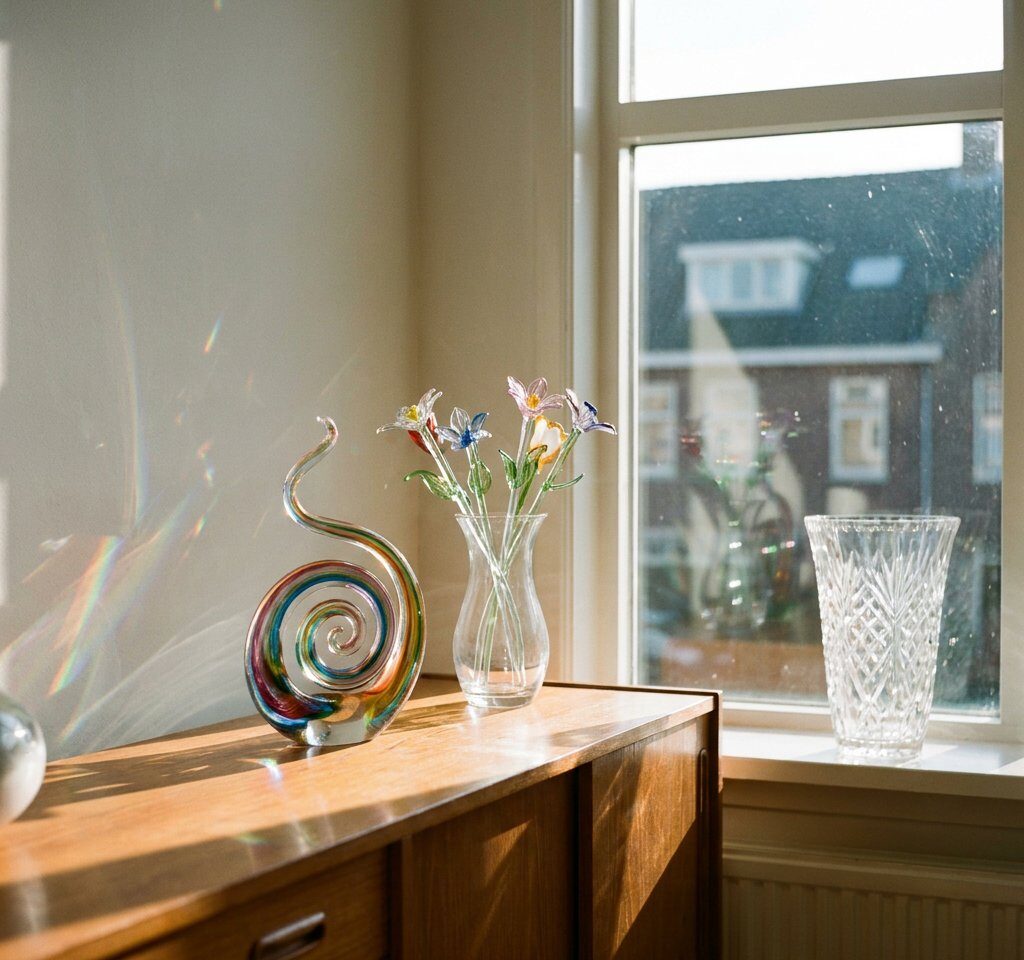
Abstract glass art is one of the most popular styles for modern interiors. Here the recognizable subject is not central; instead, form, tension, movement, and color take the lead. Think of undulating lines, ascending forms, twisted sculptures, layered colors, and objects that look different from every angle. Light is a key component of the artwork: in daytime the glass catches natural light, while in the evening artificial light brings out new accents.
Abstract glass is ideal if you want a decorative statement without being too literal. It works beautifully on a sideboard, pedestal, windowsill, or table where the object has space to breathe. Within Eliassen’s selection this style aligns well with modern glass art, abstract couples, and expressive objects with distinct color bands or marbled blends.
- Characteristics: free forms, color gradients, dynamism, play of light
- Fits well with: modern, minimalist, and design interiors
- Common shapes: sculptures, organic vases, glass objects with a twist
Figurative glass art
With figurative glass art you can immediately see what the piece represents. It can be very realistic, but also stylized or playfully executed. Examples include glass flowers, birds, animal figures, human figurines, and decorative objects that clearly reference nature or everyday life. This style is accessible because you don’t have to search for meaning or interpretation first—the work often speaks to you right away.
Figurative glass is popular in homes where warmth, familiarity, and decoration come together. A glass flower can add color and elegance, while an animal figure provides a lively accent. It’s also a strong choice for gifts, as the subject often feels personal. Within glass art this is a broad style: from refined miniatures to striking sculptures with an artistic twist.
Classic and timeless glass art
Classic glass art is often defined by balance, clarity, and refinement. Transparent or subtly colored objects, symmetrical forms, graceful lines, and high-quality finishing play a major role. This style leans less on expression and more on elegance. Crystal glass, luxury vases, bowls, and decorative objects with a calm appearance often fall under this heading.
This direction suits interiors where serenity, class, and timelessness are important. Classic doesn’t mean old-fashioned: many contemporary glass objects still carry that refined look, yet in a form that pairs well with modern interiors. If you want glass art that remains beautiful in your style for years and is easy to combine, a classic foundation is often a safe bet.
Murano influences in glass art
Anyone exploring different types of glass art soon arrives at Murano. This famous Italian glass region is known for artistic craftsmanship, rich colors, decorative flair, and technically impressive glasswork. In glass art with Murano influences you often see lively color bands, elegant curves, more pronounced shapes, and a strong decorative character. The glass is meant to stand out.
Murano-inspired glass art is ideal if you’re looking for something with presence and impact. These are often objects that claim their place in a room and work well as eye-catchers. Think of vases with powerful color combinations, sculptures with movement, and glass objects where tradition and luxury meet, as you also see with Italian glass art (Murano).
Bohemian influences and color experience
Alongside Murano, the Bohemian glass aesthetic also plays an important role in glass art. Bohemian glass is known for its craftsmanship, deep colors, refined details, and strong tradition in decorative glass. In contemporary glass art this often translates to pieces with rich color nuances, elegant design, and a clear appreciation for the material itself.
Where Murano is often expressive and bold, Bohemian influence regularly feels more refined and layered. That makes this style appealing if you like glass with character, without it needing to be exuberant. You see this quality especially in mouth-blown glass, in the interplay between color, transparency, and depth.
Modern glass art and design
Modern glass art sits at the intersection of art, interior, and design. The forms are often clean, considered, and intended to make visual impact without excess. In this style you’ll find clear silhouettes, minimalist lines, contrasts between matte and glossy, and a deliberate choice for form over ornament. That doesn’t mean modern glass is dull—simplicity lets the material speak. If you’re after more experimental variants with strong colors and forms, take a look at New Age glass art.
This style works well in contemporary living rooms, offices, and reception areas where an object should add atmosphere without becoming busy. Modern glass art is also often chosen by people who already have other art at home, such as paintings on glass, 3D, or metal, and are seeking material combinations that strengthen one another. A distinctive example is Borowski; see Borowski glass art: style and origin.
What’s the difference between style, technique, and form?
In glass art, style, technique, and form are often confused, yet they mean different things. Style concerns the visual appearance of the object—think abstract, figurative, classic, or modern. Technique concerns how the work is made, such as mouth-blown glass, glass fusing, or crystal work. Form describes what the object physically is, for example a vase, bowl, sculpture, lamp, or paperweight.
This difference matters when choosing glass art. A mouth-blown vase is not a style but a technique and product form. That same vase can be executed in an abstract, classic, or figurative way. By keeping these three layers separate, you compare art objects more purposefully and better understand what you truly like.
Popular techniques in glass art and their influence on style
Technique not only determines how an object is made, but also how it looks—especially in glass art. Some techniques yield soft transitions and organic forms, while others create more layering, structure, or clarity. As a result, technique directly influences the final style experience.
Mouth-blown glass
Mouth-blown glass often offers a lively, artisanal appearance. Small variations in form and thickness make each piece unique. This technique suits both abstract and classic glass art, depending on color and design.
Glass fusing
In glass fusing, layers of glass are fused together. This yields interesting patterns, color fields, and layered effects. You often see this technique in decorative panels, bowls, and modern art objects.
Crystal glass
Crystal glass is known for clarity, sparkle, and a luxurious look. It pairs beautifully with timeless or classic styles, but also with modern designs that emphasize purity and light reflection. See the Crystal glass collection for timeless and modern examples.
What types of glass art are there?
The question of which types of glass art exist usually refers to the object’s form. Here, too, the options are broad. You’ll find glass art not only as free-standing sculpture, but also as functional decorative objects or wall art. That makes glass attractive for different places in the home.
- Vases and bowls
- Glass flowers and animal figures
- Glass sculptures and human figurines
- Paperweights and miniatures
- Glass lamps
- Glass paintings and glass panels
- Crystal glass as a decorative art object
Each form can be executed in a different art style. A glass vase can be classic and transparent, but also abstract with bold color bands. An animal figure can be lifelike or modern and stylized. That’s why it’s smart to look not only at the type of object, but also at the visual language behind it.
How to recognize a glass object’s style
Not sure which style a glass object has? Start with four basics: form, color, detail, and appearance. An abstract piece usually has no literal subject and plays with movement and composition. A figurative object shows recognizable shapes such as flowers, birds, or people. Classic glass art often looks symmetrical, refined, and clear. Modern glass art is cleaner and more design-driven.
| Style | Form | Use of color | Appearance |
|---|---|---|---|
| Abstract | Free, organic, dynamic | From subtle to bold | Artistic and expressive |
| Figurative | Recognizable subject | Often decorative and lively | Accessible and personal |
| Classic | Balanced and refined | Clear or understated | Timeless and elegant |
| Modern | Clean, clear, considered | Deliberate contrasts | Stylish and contemporary |
How to choose glass art that suits your interior
The best choice starts not only with taste but also with the space. In a calm interior, an expressive abstract glass object can work beautifully as an accent. If you already have plenty of color and form at home, a clearer or more classic piece is often stronger. Also consider light: glass art looks best where daylight or targeted lighting brings the material to life.
Also consider scale. A small mouth-blown object can feel refined in open shelving or on a desk, while a larger glass sculpture comes into its own on a pedestal or sideboard. When combining glass art with other materials—such as metal, wood, or paintings on glass—aim for balance. The contrast between materials is what makes an interior exciting.
If you want to compare different styles in person, that’s often easier in a large store or showroom. At Eliassen in Ammerzoden you can view many glass art pieces live. That helps, because glass is a material you ideally see in real life to properly judge color, depth, and light play.
Glass art for home, office, or as a gift
The right style also depends on the purpose. At home people often choose a piece that adds warmth, color, or personality to the space. In offices, modern or abstract glass art often works well because it looks professional while adding atmosphere. For gifts, figurative glass objects, flowers, miniatures, or elegant vases are popular, safe choices.
Practically speaking, service is at least as important as style—especially with fragile art, you want careful packing and safe delivery. Eliassen combines online ordering with a large showroom in Ammerzoden, expert advice, and a wide range for customers in the Netherlands and Belgium. That makes it easier to choose a style that’s not only beautiful but also truly suited to its destination.
Frequently asked questions about art styles in glass art
What are the different types of glass art?
Different types of glass art include vases, bowls, glass sculptures, glass flowers, animal figures, human figurines, paperweights, lamps, and glass panels. These forms can then be executed in abstract, figurative, classic, or modern styles.
Which glass art fits best in a modern interior?
In a modern interior, abstract glass art and clean design objects usually work best. Look for clear lines, a calm shape, or one strong color accent. Objects with a distinctive silhouette perform well as eye-catchers.
Is mouth-blown glass an art style?
No, mouth-blown glass is a technique. The art style concerns the object’s appearance, such as abstract, figurative, or classic. A mouth-blown object can therefore fall within different styles.
What is the difference between Murano glass and Bohemian glass?
Murano glass is often known for lively colors, decorative flair, and pronounced forms. Bohemian glass typically has a refined look, rich color depth, and a strong craft tradition. In contemporary glass art you’ll see influences from both.
How do you recognize abstract glass art?
Abstract glass art is recognizable by free forms, movement, interplay of colors, and the absence of a literal, recognizable subject. The object is more about feeling, composition, and light than about a concrete depiction.
Which art form does glass art belong to?
Glass art belongs to the visual arts. Within that broad category, glass occupies a special place because it is both artistic and artisanal, and sits close to design and interior decoration.
Why is glass art so suitable as decoration?
Glass art responds strongly to light and therefore changes with the space and the time of day, giving a piece a sense of liveliness. In addition, glass comes in many styles, making it suitable for both classic and modern interiors.
Where can you view glass art in real life?
If you want to properly evaluate glass art, it’s smart to view pieces in person. That’s when you truly see how color, transparency, size, and finishing come together. At Eliassen you’re welcome in the large store and showroom in Ammerzoden, alongside the webshop for all of the Netherlands and Belgium. If you’re curious about current developments, you can also view the latest trends in glass art.
Share on:
Share Tweet Share Share Pin it