



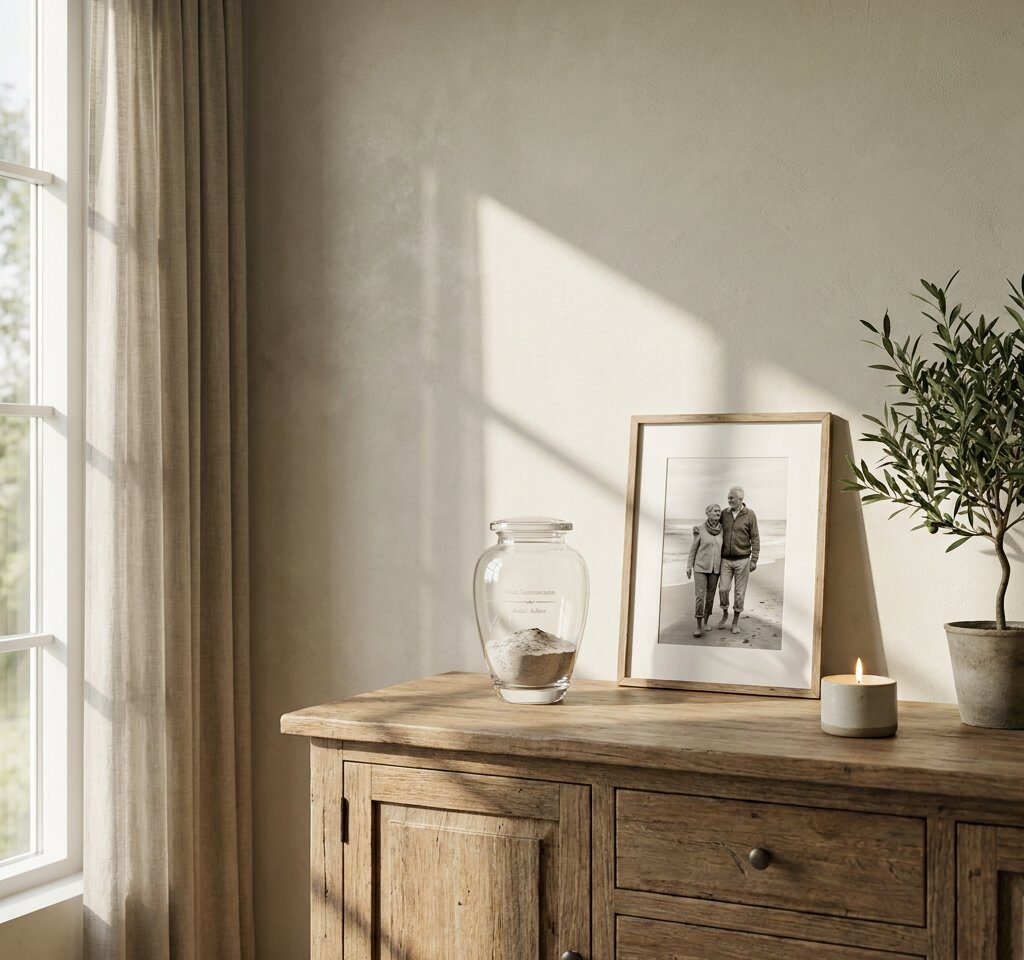
Choosing a glass urn? Practical guide and tips
|
Choosing a glass urn is about more than looks. The right size, capacity, placement, and the feeling an urn evokes make the difference. Glass has a soft, clear appearance and often suits the home well, but it’s also a material for which you’ll want to think carefully about use and location. If you’re figuring out which glass urn fits your situation, it helps to first decide how much ashes you want to keep, where the urn will be placed, and which design best matches that.
On this page, you’ll learn what to consider when choosing a glass urn, which types are available, and how to make a choice that feels both practical and personal.
What to consider with a glass urn?
If you’re wondering how to pick an urn, the same points usually come up. For a glass urn these are mainly capacity, shape, color, finish, and the place you want to put it. Because glass catches light and its look changes with the surroundings, placement is especially important.
- How much ashes you want to keep — all or a small portion
- The right size of the urn
- A shape that suits your taste and interior
- Transparent, colored or more opaque glass
- Suitable for indoors or possibly outdoors
- Stability and safe placement
By going through these points one by one, you make the choice clearer and avoid deciding on looks alone.
How large should a glass urn be?
The question of how large an urn should be for an adult is often the main starting point. To keep all the ashes of an adult, a capacity of about 3.5 liters is commonly used as a guideline. This is a practical rule of thumb. The exact capacity can vary per situation, so always check the stated volume of the urn itself.
If you don’t want to keep all the ashes but only a symbolic portion, a smaller glass urn or mini urn is often more suitable. This is, for example, chosen when the ashes are shared among family members or when you want to create a subtle memorial spot at home.
General size guideline
| Size | Capacity | Suitable for |
|---|---|---|
| Mini urn | up to 0.5 liters | A small amount of ashes or sharing among family |
| Small | 0.5 to 1 liter | A modest portion of the ashes |
| Medium | 1 to 2.5 liters | Keeping more ashes without choosing a large model |
| Large | more than 2.5 liters | Often chosen for keeping all ashes |
What different types of glass urns are there?
With glass, the types of urns mainly differ by capacity, purpose and appearance. Within glass urns, you’ll usually see a few clear choices, which helps you decide more quickly which type best suits your wishes.
Large glass urn
A large glass urn is intended for those who want to keep all the ashes in one urn. This type is often chosen as a permanent memorial spot at home. Because of the larger size, appearance also plays a bigger role: a large glass urn stands out more and more easily becomes part of the interior.
Mini glass urn
A mini glass urn is suitable for a small amount of ashes. This model is often chosen as a personal remembrance for home or when several next of kin each want to keep their own urn. The size is smaller and therefore often more subtle.
Glass urn with an extra function
Some glass urns have an additional function, such as a design that also serves as a memorial object or candle holder. For people who prefer an urn that isn’t immediately recognizable as an urn, this can be a fitting solution. The object then has a double meaning: decorative and personal at the same time.
Glass urn for indoors or outdoors
Most glass urns are placed indoors. There are also variants that are better suited to outdoor use, but it’s important to pay close attention to material treatment, weather resistance and a stable location. A regular glass urn isn’t automatically suitable for rain, frost and prolonged sun.
If you’re specifically looking for an animal-themed urn in another material, see Stone animal urns.
Why do people choose a glass urn?
A glass urn has a different look than urns made of, for example, wood, ceramic or metal. Glass often appears lighter, softer and more refined. Especially in a living environment that can be pleasant. The urn then feels less heavy or massive and often fits more naturally on a sideboard, cabinet or memorial spot.
In addition, many people appreciate the unique character of glass. Handcrafted or mouth-blown glass often shows small differences in color, pattern or shape. That uniqueness makes a glass urn personal. Light also plays a role: transparent or colored glass subtly changes appearance throughout the day.
Choosing color, transparency and shape
When choosing a glass urn, the visual aspect often plays a large role. Glass can be clear, partly transparent, colored or more opaque. Each choice gives a different atmosphere. Transparent glass looks open and light, while deeper colored glass often gives more warmth and calm.
Shape also matters a lot. A round shape often feels softer and more organic, while a more streamlined model can look calmer or more modern. So don’t just look at the urn itself, but also at the space where it will stand. Because of light, background and the materials in your home, the same glass urn can come across quite differently. If you also want to compare other remembrance products, take a look at Urns and grave decoration (bronze).
- Choose clear or transparent glass if you want a light, refined look
- Choose colored glass if color has a personal or symbolic meaning
- Choose a calm shape if the urn should blend into the interior
- Choose a more expressive model if you want the urn to be a visible memorial
Handmade glass or mass-produced?
With glass urns you’ll often encounter both handmade and more mass-produced models. Handmade glass has the advantage that each piece is slightly different. Small differences in air bubbles, color shading or shape are part of it and add character. For many people, that unique aspect is particularly valuable.
Mass-produced glass urns are often more consistent in shape and finish. Which choice is better depends on what you value: uniqueness and craftsmanship, or a neater and more predictable end result. For ordering and delivery, careful packaging is important; read more in Safe shipping and packaging of glass art.
Where should you place a glass urn?
A glass urn is usually placed indoors in a quiet, stable location. Think of a sideboard, cabinet, console table or a fixed memorial spot. Because glass is more fragile than some other materials, it’s wise to avoid busy walkways and places where children or pets could easily bump into it.
Also pay attention to light. That’s not only beautiful, it also helps you assess how the color and transparency of the urn work out in your space. An urn can look very different in morning light than in artificial light or shade. Read more background in Importance of light in glass art.
Practical placement tips
- Place the urn on a flat and stable surface
- Avoid edges, windowsills with risk of bumps, or narrow shelves
- Prefer a quiet spot outside direct walkways
- Check that the urn stands firmly and is well finished or closed
- Consider how sunlight affects color and appearance
Is it allowed to bury an urn in the garden?
Many people also wonder whether it’s allowed to bury an urn in their own garden. In the Netherlands this is often permitted on private property, but rules can differ per situation. Always check the current local regulations and any conditions that apply to your home or municipality.
Aside from regulations, glass isn’t always the most logical choice for burial in a garden. Not every glass urn is designed for that purpose. If you want to place or bury an urn outdoors, look specifically for a model that’s suitable for it.
Caring for a glass urn
Cleaning a glass urn usually requires little work, but it does require care. Prefer a soft, dry or slightly damp cloth. Abrasives or rough sponges can cause scratches. Always lift a glass urn carefully and move it as little as possible once you’ve chosen a good spot. Read more practical pointers in Maintenance and cleaning of glass art.
Frequently asked questions about choosing a glass urn
How do you choose an urn?
Start with capacity: do you want to keep all the ashes or just a portion? Then look at size, placement and appearance. With a glass urn, it’s smart to pay extra attention to light, stability and suitability for indoors or outdoors.
How big should an urn be for an adult?
For keeping all the ashes, about 3.5 liters is usually used as a guideline. Always check the exact capacity of the model you have in mind.
What different types of urns exist within glass?
The most common choices are large glass urns, mini glass urns, decorative models with an extra function, and some versions that are suitable for outdoor use. The differences mainly lie in capacity, shape and purpose.
Is a glass urn only suitable for indoors?
Usually yes. Many glass urns are intended for a fixed spot indoors. There are versions for outdoor use, but they must be specifically designed for that.
Why do people choose glass?
Glass often has a calm, refined and light appearance. Many people also appreciate the unique character of handmade glass, especially when the urn should feel like a personal memorial object. For extra background on materials, you can also read about Difference between crystal and glass.
Where can you get advice on a suitable choice?
If you want to see different styles, materials and home decor in real life, personal advice can make it easier to compare what suits your taste and interior. Eliassen is a family business known for service, personal guidance and a large store/showroom in Ammerzoden, alongside the webshop for customers throughout the Netherlands and Belgium.

Share on:
Share Tweet Share Share Pin it